Overloaded Power Points in Your Waitara Home
Power boards stacked two and three deep at every point is more than untidy, it's a hazard building quietly behind the wall. Call (02) 9054 3079 and let's get a proper fix underway.
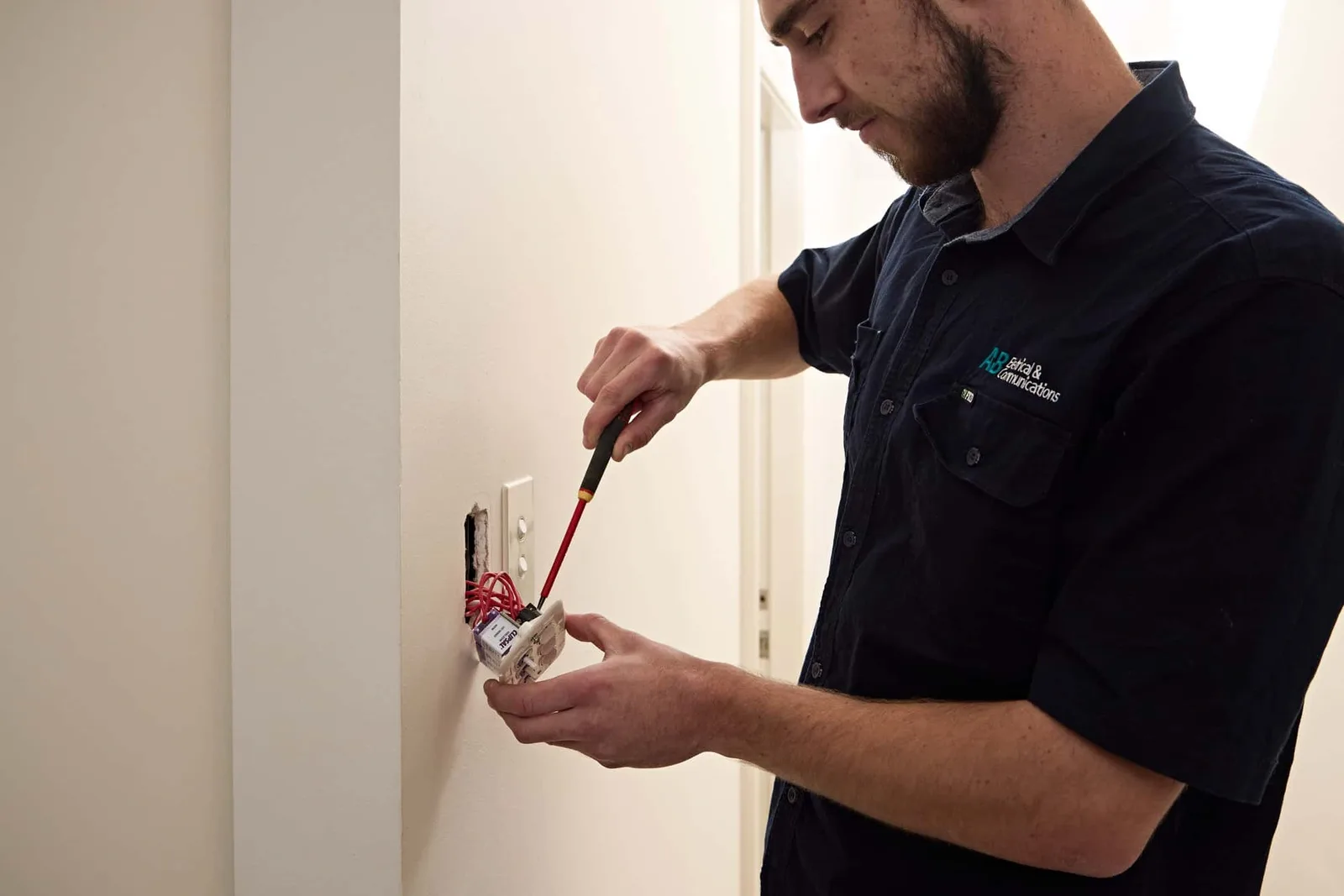
What an Overloaded Power Point Actually Means
Every power point and the circuit behind it is rated for a maximum current draw, and that rating exists for a reason.
Push past it consistently, whether through one high-draw appliance or several devices stacked on power boards, and the point and wiring start running hotter than they're designed to handle. That heat builds gradually, which is exactly why it's easy to miss until something more obvious happens.
Modern households run far more devices than the points in an older home were ever built to support, and that gap is where this fault usually starts.
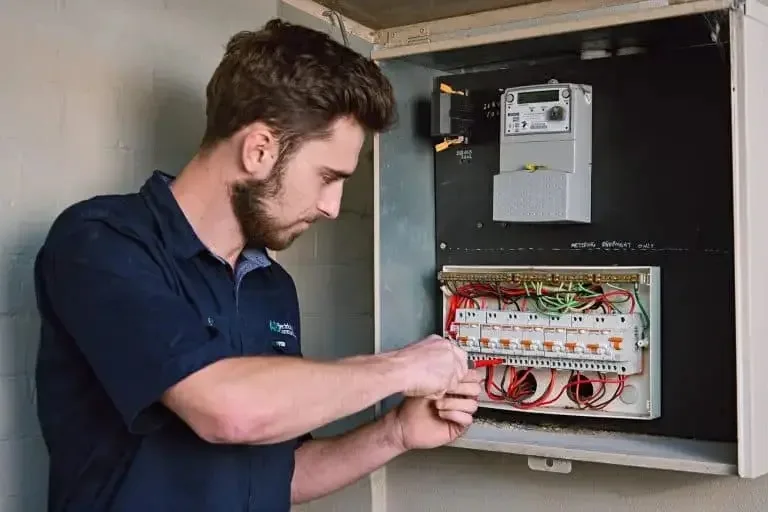
The Most Likely Causes
Here's what typically pushes a point past what it can handle.
- Power boards daisy-chained onto other power boards, multiplying what a single point carries
- A high-draw appliance like a heater or air fryer sharing a circuit with several other devices
- Too few points in an older room, forcing everything onto one overworked outlet
- Charging multiple devices continuously on the same board, adding up to more than it looks like
- A circuit shared across more of the house than it was ever designed to serve
Should You Worry? An Honest Answer
A power point that's warm to the touch, a power board with a faint smell, or a safety switch that trips repeatedly on one circuit are all signs worth acting on rather than living with.
Genuinely urgent signs are heat you can feel, any smell of burning plastic, or visible discolouration around the point or board.
If it's just a stack of power boards with no heat or smell, it's still worth fixing properly, just not an emergency tonight.
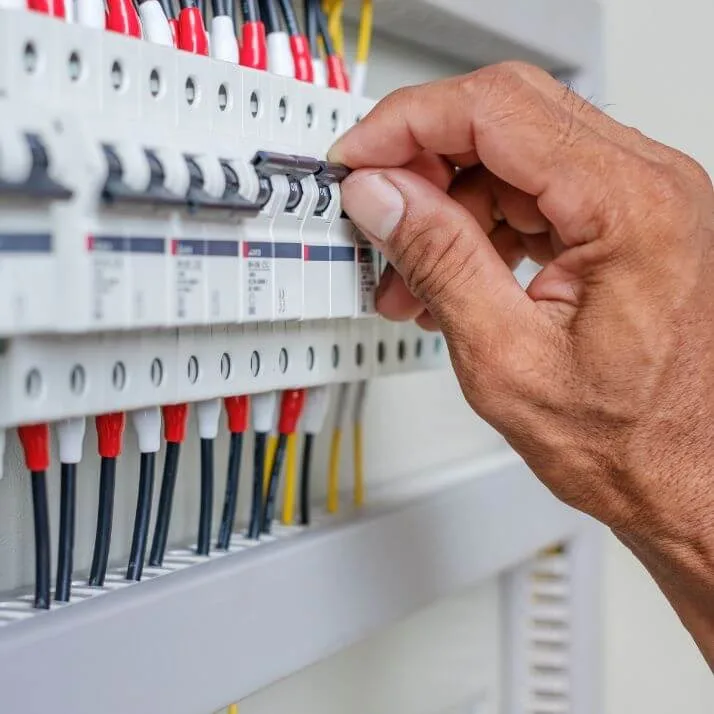
What To Do Right Now
- Unplug non-essential devices from the overloaded point to reduce the load immediately.
- Feel for warmth at the point and any power boards plugged into it.
- Avoid daisy-chaining power boards further while you wait for a proper assessment.
- Call us to book a look at adding points or spreading the load across separate circuits.
How We Fix It
We start by checking the point and any wiring behind it for damage from sustained heat, then measure the circuit's actual load against its rated capacity.
From there, the fix usually means adding extra outlets in the right spots, moving high-draw appliances onto their own circuit, or in some cases recommending a switchboard upgrade if the whole board is under-resourced for the household running through it.
Any notifiable work is tested and a compliance certificate provided once finished.
Why This Is Common in Waitara Homes
Older double-brick homes on Waitara's quieter streets were built with far fewer points per room than a modern household actually needs, which is exactly the setup that leads to power boards stacking up over time.
Newer developments near the station aren't immune either, since higher-density living often means more devices packed into smaller floor plans than the original electrical design allowed for.
The Habit That Sneaks Up on People
Adding one more device to an already-crowded power board rarely feels like a big decision in the moment, and that's exactly the problem.
A board that handled four plugs comfortably a year ago slowly ends up carrying six or seven, with nobody consciously deciding to overload it. Each new charger or appliance seems small on its own.
It's the accumulation that catches people out, not any single device. A quick load check every so often costs far less than waiting for a warm power board to tell you there's a problem.
Keeping It From Coming Back
The fix that actually lasts usually involves one of these rather than another power board.
- Add power points where they're genuinely needed, rather than relying on boards to fill the gap
- Move high-draw appliances onto dedicated circuits so they're not sharing with everything else
- Have a switchboard assessment if multiple circuits are regularly under strain
- Fit USB and smart points that reduce how many separate chargers a room actually needs
- Get an electrician's opinion before a big appliance purchase to check the circuit can handle it
The Insurance Angle
A fire that's traced back to an overloaded circuit can complicate a claim, particularly if the point had visible signs of strain beforehand that were never addressed.
Having the load properly assessed and fixed, instead of just adding another power board, keeps this a preventable problem rather than one an insurer might push back on.
Any job we complete carries a Certificate of Compliance, useful paperwork to have on hand regardless.
Servicing Waitara and the Suburbs Around It
We work across Waitara and the neighbouring suburbs, including Hornsby, Wahroonga, Normanhurst, Asquith and Mount Colah, for exactly this kind of assessment and fix.
Whichever side of the suburb you're on, this is a fix worth booking properly rather than adding yet another board to the pile.

Book an Electrician Today
Power boards stacked up everywhere and want it sorted properly? Call (02) 9054 3079.
We'll assess the actual load and fix it at the source, often same or next day.
Common questions
Overloaded Power Points FAQs
Can an overloaded power point cause a fire?
Yes. A point running well beyond what it's rated for generates heat, and that heat building steadily inside a wall cavity is a real hazard if it's left unchecked.
Should I turn off the mains?
Not usually, unless you notice heat, smell or a tripped safety switch that won't reset. Otherwise, just unplug from the overloaded point and call us to look at a proper fix.
How do you find the fault?
We check the point itself for heat damage or wear, test the circuit's load, and look at what's plugged in across the whole run to see where the demand is coming from.
Will my safety switch protect me?
It protects against shock, but an overloaded point can still run hot without tripping anything, which is exactly why persistent overload is worth fixing rather than living with.
Do old fuses make this worse?
Yes. A household running on a genuine fuse board has fewer circuits to spread the load across, so more devices end up sharing each one and pushing points toward overload sooner.
How fast can you get to Waitara?
Response is often same or next day for a standard assessment, faster again if you're already seeing heat or smell at the point.